TW: discussion of mental illnesses, caregiver abuse
Anyone with the link can view/add comments https://docs.google.com/document/d/1PXPI5zy65FQsvXqHkEOFDp-oci3uW8bwntRyP4F5zcw/edit?usp=sharing
not just another wordpress site
TW: discussion of mental illnesses, caregiver abuse
Anyone with the link can view/add comments https://docs.google.com/document/d/1PXPI5zy65FQsvXqHkEOFDp-oci3uW8bwntRyP4F5zcw/edit?usp=sharing
Word count: 530
Chapter 17 of The Secret Garden is what I consider the defining chapter of the novel’s theme of disability and its treatment of it. In the beginning scene, Mary wakes up to hear Colin crying again at night. He’s throwing a tantrum because he thinks he’s found the lump on his spine that will turn him into a hunchback like his father and he will die. Mary’s approach to calming him down is to scream right back at him, and when she looks on his back, she finds that the only lumps there are his bones sticking out. Everything is just dandy, and the nurse tells him that he’ll be able to grow up as long as he goes out and gets fresh air. He decides he’s going to go out with Mary and Dickon in the Garden, and later on the novel ends with both children, once spoiled and angry, living happily at Misselthwaite! Yay, right?
This scene’s approach to potential disability is abhorrent (in my opinion at least), but it is very telling of the author’s opinion on disability in children: kids who are supposedly disabled are only overreacting. There’s actually nothing wrong with them at all! All they need is some fresh air and good meals, and they’ll function like any other child. Maybe some love from adults in their life too, as both Mary and Colin were neglected by their parents. Mary was the first to transform and be “cured” this way. She even says so herself in the scene. She used to be like Colin until she came to Misselthwaite Manor and “got fatter.” Once she’d started going outside, eating more, and making friends with people like Dickon and Martha, she was a perfectly normal child. Now it’s Colin’s turn to be “cured” of his illness, so that he can be normal like her and not throw as many tantrums.
The movies often don’t hold true to the scene in the book. Out of the multiple I watched, the closest to the dialogue of the scene was in the 1993 adaptation, but much of it was still changed. Judging from the trailer, I doubt the 2020 adaptation will be any better. Therefore, my goal for this project was to create a more accurate portrayal of the scene (though I realized I missed a bit of dialogue after I had finished editing the video, sorry about that). I drew all the panels myself, and edited in voice acting (none of us are pros so be easy on us there), sound effects, and music for ambiance.
The Secret Garden was one of my favorite books when I was little, and I still enjoy it despite the new view I have on the novel. I wanted to keep the seemingly uplifting atmosphere the scene has when Colin discovers he’s not sick at all, despite my disagreement with what is being implied. Because despite how bad it sounds — Children aren’t disabled; they just need fresh air and food — the author still portrays it in a positive light. I wanted to keep it as accurate to the book as possible whether or not I agreed with what was being said.
Richard Yeomans
Dr. Foss
English 384-Section 01
April 24, 2020
Word Count: 453
Project Write-up
For my Major Project assignment, I actually partially referenced my own past in the story with regards to it having been the seventh grade that I was diagnosed with Attention Deficit Disorder after years of testing at the bequest of schools who would then be notified that I was too bright for the Special Education classes which they’d been trying to push me into. I also took reference from both John Steinbeck’s Of Mice and Men with how Lennie and George interacted, as Kevin has times where his internal mentality struggles between the two sides of a coin. The Lennie side of his mind (which drew on impulse), would try to do things such as hiding his homework to avoid doing it instead of playing video games or watching television, and George’s more logical side of the mind having to rein in such impulsivity to remind him of what happened the previous time he’d tried that. It also refers to Collin Craven from Frances Hodgson Burnett’s The Secret Garden for the character of Sean who is trapped in a wheelchair (although in Sean’s case it was the result of spinal bifuda). Both Kevin and Sean are ostracized by their classmates for their perceived weaknesses.
I began with a rough layout after setting a character spreadsheet of who would be included, and then a general idea of the plot. Once that was completed, I then started on the rough draft of the story, typing it out before proofreading (I used the “Read Aloud” script reader on Microsoft Word to do this so as to remain impartial) and editing to see what worked and what needed to be tweaked/dropped. After that, I then retyped the final version for everyone’s enjoyment.
I enjoyed working on Kevin, because it gave me a chance to look at things from my past through not just the eyes of my own self, but from the eyes of others who had experienced it at the time, with even seeing the old reports from the school board in regards to my testing as a young child when the teachers would be pushing for me to be put in Special Education because they felt that they couldn’t handle me due to issues like frequent daydreaming and not wanting to do assignments (and the Special Education teacher at my most notable Elementary school hated her job and would sadly talk down about her students in front of the regular students all the time (frequently saying that her students were the “stupid kids of the school”)). And as there is always more than one lens to look at an issue through, it was certainly beneficial for me healing some of the wounds of the past.
I did my major project as a paper on the perception of those with disabilities, focusing on Harper Lee’s To Kill a Mockingbird. I drew on different charecters, their lives, and their backgrounds to find examples and similarities with the perception disabled individuals. I also touched on how society has a tendency to place disabilites on people who may otherwise not have one in order to make sense of who that person is.
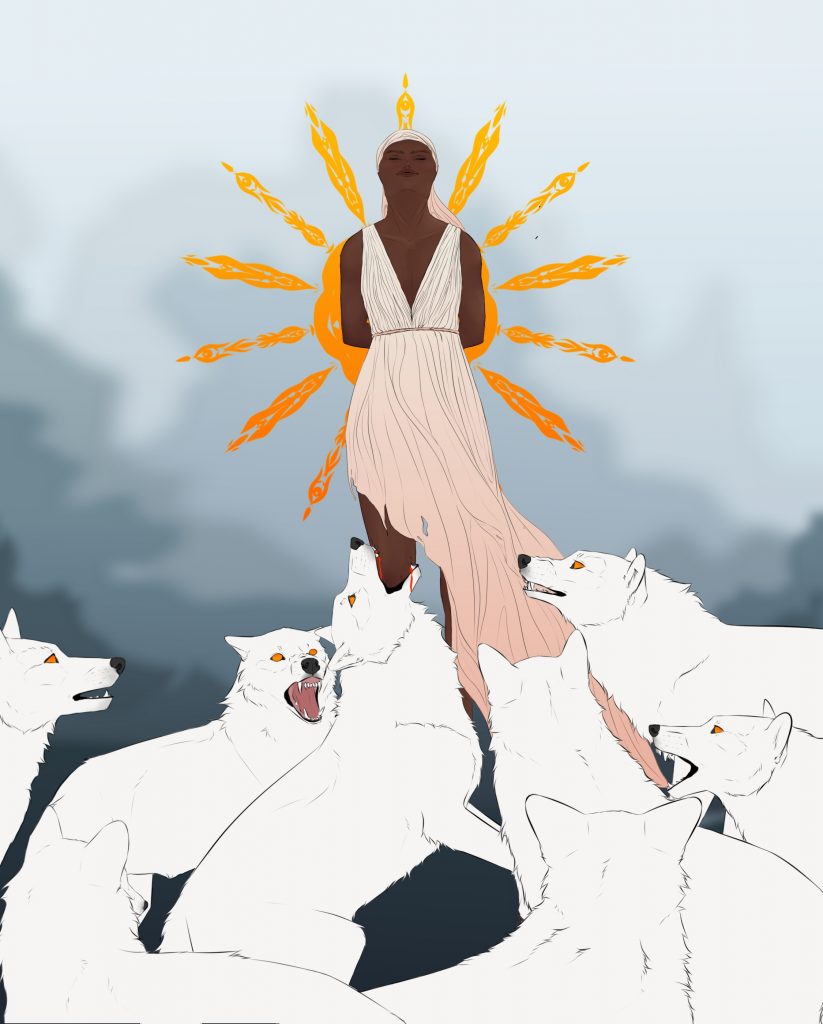
Toni Morrison’s work often features myths and mythologization as a theme. While there are several instances of allusion and parallels to Classical mythology in Sula, I was struck by the similarities that can be drawn between the treatment of “madness” (or, realistically, mental illness) and curses. Historically, mental illness has often been treated as a kind of moral failing on the part of the person afflicted, making them dangerous to even associate with, as one does not want to find themselves similarly disposed. There is also significant evidence that many psychiatric disorders have a genetic component, allowing them to run through family’s generationally, similar to many mythological curses. The purpose of assigning a moral valuation to people with mental illness and equating it with a curse is twofold: on the one hand, presenting mental illness as a result of tampering with forces outside of one’s control and subsequently being punished by a higher power functions as a very effective scare tactic in regards to keeping people in line with societal norms. On the other hand, it serves to isolate them from society by presenting them not as a victim, but rather as a perpetrator, and instigator, and someone undeserving of sympathy.
Of all the curses in Classical mythology to choose from—because the Greeks were viciously bloodthirsty, and very fond of punishment—the one I thought most reminiscent of Eva Peace was the tale of Lycaon, the twisted King of Arcadia who tested the god Zeus and paid dearly for it. Lycaon, in an attempt to trick Zeus, tried to feed the god King the entrails of Lycaon’s own son, Nyctimus, to see if the god was truly omniscient; the end result was, of course, that Zeus recognized the treachery, and as a punishment turned Lycaon and all his children aside from poor Nyctimus into wolves. Eva Peace, the matriarch of the Peace family with a questionable understanding of ethics, is similar in many ways to Lycaon. She falls under a similar role of a person who, while powerful in their own right, does not possess the grand influence that they perhaps believe they do. In the end, both Eva and Lycaon are the victims of their decisions in life, with Eva being left in a nursing home, and Lycaon roaming the wilderness in Greece. She also, like Lycaon, makes multiple sacrifices by way of the flesh, both her own and her son Plum’s, as well as possibly her daughter Hannah’s. While not all of her actions were bad, Eva’s influence deeply affected the lives of her children and grandchildren, and the general misfortune and mediocrity they find in life can, in many ways, be attributed to Eva. She is the first of the ravening wolves, but no one who is under her influence escapes entirely unscathed. While Eva is never explicitly described as being mentally ill in the novel, Sula doesn’t scrimp on showing her as someone with delusions of grandeur (subconsciously placing herself as a God-like figure in the Bottom community), as well as someone fully capable setting her own son on fire and murdering him in cold blood while fully believing it to be the right thing to do.
In my art, I wanted to present the vision of Eva, torn between two sides; her internal vision of herself as a divine figure, and the monstrous external consequences of her actions. I also wanted to tie in the myth of Lycaon in a rather obvious way. The end goal was to encompass the parallels between mythology, curses, mental health, and Eva’s own story in a way that expresses not only the violence, but also the underlying tragedy and sense of ruination that Eva brings nipping at her heels.
Word Count: 621
Sources:
Ovid, and Rolfe Humphries. Ovid: Metamorphoses. Indiana University Press, 1971.
Hergenhahn, B. R., and Tracy B. Henley. An Introduction to the History of Psychology. Cengage Learning, 2019.
Donaldson, Elizabeth J. Literatures of Madness: Disability Studies and Mental Health. Palgrave Macmillan, 2018.
Daniel Hur
Dr. Foss
ENGL 384
24 April 2020
For the process of my story, it took some time for me to come up with an idea for a story. Part of the reason that I came up with the hockey story had a lot to do with the fact that I knew someone that I grew up with that also had a head trauma similar to that. Because of the head-trauma he received while he was playing football, he had trouble with aspects of his life such as focus and concentration. Thinking of him, that was how I came up with the character of Penelo, in which the sports that she took part of caused her to have a serious head trauma. I also tried to have Penelo struggle with other disabilities like PTSD. Usually most people seem to think of PTSD as an ailment that affects people like war soldiers; however, the truth of the matter is that people with PTSD can live very ordinary lives. Sometimes it can be an every day aspect that causes a person to suffer from PTSD. Ultimately this is how I came up with the inspiration of Penelo and the problems that she suffered from.
Some of the issues with depression that Penelo struggled with also applied to me. Growing up, I was also taken to a lot of therapists for social anxiety. This allowed me to find closure for some of the problems that I had. One of the ways that the therapists helped me was through the usage of medication. My parents had a lot of mixed feelings when it came to medication, which is how I came up with the inspiration for the fact that Penelo’s parents had some problems with it. I wanted to make both Penelo and Dr. Brushae be really close because I wanted the tragedy that occurred towards the end to have a great weight. It was like Dr. Brushae’s presence was no longer needed in the healing process for Penelo.
After drawing from all of these experiences, I started to make a draft of the story. In the story, I found that the memories that I had of being tested for depression naturally started to manifest itself across the pages of the first draft. Of course, I felt like the story needed a lot of polishing, so I wrote another draft. In the second draft I tried to clear up some of the character interactions, and I did my best to make each of the characters sound like they are talking like human beings. This is how I managed to come up with all the human characters because most of them are based off of people from my own experiences.
All in all, that is how I came up with the story for Penelo. I managed to find that it was not difficult pulling from my own experiences and incorporating it into a narrative style. However, actually polishing the draft was the main struggle that I had. Through the character of Penelo, I was able to write about some of my experiences.
Words: 500
ATypical
Disability & Literature
An Episode Review: S1, E5 “That’s my Sweatshirt”


To bring awareness to Autism, I have dedicated a review poster of the show, Atypical. A show which brings attention to the everyday life of Sam Gardner, a teenager who is on the spectrum. By talking about Sam’s symptoms, lifestyle, and the community that interacts with him, readers will get a better understanding with people with this disability. By watching this series, viewers will realize that Sam Gardner doesn’t need to be treated any differently than your friends or neighbors. I am very passionate about bringing attention to those with disabilities, and telling the world that those who have disabilities do not want to be fixed by anyone that they encounter.
The main character of this television series, Atypical, stars a high schooler on the Autism spectrum. Autism defined is a “developmental disability that affects an individual’s ability to communicate and the ability to engage in social interaction” (2). Sam Gardner is 18 years old, and is eager to explore newer things while he grows to be more mature. Sam works at a technology store called “Techtropolis” with his best friend, Zahid, and enjoys listening to Zahid’s stories about girls. Listening to these anecdotes, Sam brings up to his therapist (in previous episodes) on how he would get a girlfriend. In this episode, Sam gets a girlfriend that he so much wanted.. However, he gets seriously frustrated when his new girlfriend takes his green hoodie.
Little did Sam know, girls love having something of their man’s to feel closer to them!
Another thing viewers should know is that Sam is very passionate about Antarctica, and it’s wondrous penguins that live there! He often relates his own life to the animals that live in the Arctic. With his fascinating memory, and genuine heart, Sam is not afraid to speak his own truth whether somebody wants to hear it or not.
People with autism have different ways of learning, paying attention, and reacting to situations. Signs of autism last throughout a person’s life, so I broke this review down by titling the symptoms that Sam Gardner shows in Atypical.
In the beginning of the episode, Sam says that before he started working at Techtropolis, he learned about every detail within the store. Including the products, the store’s rules, and procedures. Sam even included in his thoughts that he had to watch what he says to customers. Like, not telling customers they smell bad when they seriously do!
A common trait that people with autism struggle with is being unemotionally blunt. While some of Sam’s bluntness can be harsh, some of it can be rather funny. Sam described his boss as “having hairy knuckles, but being very nice” (0:26). Something like noticing someone with hairy knuckles as a first impression is very unusual but comical. Oftentimes, people on the spectrum will avoid eye contact in first times of meeting. Which carries into an assumption that people like Sam are “socially awkward.” Sam often notices other particular things that most people don’t in social interactions. Which makes his character unique and fun to learn more about. Makes viewers wonder what Sam Gardner has to say about you?
After Sam’s first shift, he explains to his audience how he doesn’t enjoy new things coming into his life. But, then relates his situation to how arctic animals need to experience newness to survive (1:25). Sam is also encouraged by his therapist to explore new things as he grows up. Two of the things being a job, and getting a girlfriend.
Paige Hardaway, Sam’s girlfriend, is super controlling when it comes to being in a relationship. In this particular episode, Paige attempts to control Sam and his “arctic talk” by giving him an amount of cards. Each time Sam talks about Antarctica or animals that live there, he has to give up a card to Paige. Once he runs out, he cannot talk about the Arctic anymore. Paige manipulates the fact that Sam likes to follow rules, and feels that his factual information is annoying, and irritating to others. Sam is questioned by his mother if he likes this method or not, and Sam bluntly states that “it’s annoying, but it makes everyone happy” (6:50). Sam clearly doesn’t like when others try to fix what he is passionate about. Let alone, Sam doesn’t want anyone to mess up on his idea of order. When Paige walks into his room, she starts to fidget with every single one of his things (7:14). This irritates Sam, and causes him to do the only thing he feels that would work: locking Paige in the closet. The only way Sam knows how to express his emotions is by simply doing. Finding comical relief in this scene, Paige, oddly accepts that Sam needed to be alone. But, still, doesn’t seem to respect Sam’s personal space. While she is locked in the closet, Paige secretly takes Sam’s sweatshirt.
The following day, Paige prances up to Sam at school wearing his green hoodie. Sam immediately notices, and can’t stand the thought of somebody wearing a piece of his clothing (12:17). After Paige rambles about how cool it is to wear this sweatshirt, Sam physically leaves the conversation without an explanation. Thus, showing viewers the best way Sam can handle that situation, was to just take himself out of the problem physically (12:50).
Towards the end, Paige wonders why Sam has distanced himself from her. So, she goes to Sam’s sister, Casey, for advice. Casey bluntly tells her that she needed to lay off her brother because he didn’t eat his lunch the other day. As she continued, Casey reminded Paige that “this is what you get with Sam”, giving her brother a negative connotation (19:20). Being the protective sister she is, Casey then questions why Paige is with him in the first place.
Paige describes Sam with such positive qualities. But then, describes Sam’s way of thinking as interesting.
Casey warns Paige one last time that if she leaves, Sam will be more hurt than anyone else. People with autism barely like change, so Casey assumed that it would be best if that relationship stopped (20:25). While some with autism might struggle with serious and emotional feelings. Sam certainly wants to explore that on his own. Just like no one should make those sorts of assumptions about anyone.
Sam makes that known to Casey that she was wrong for pushing Paige away, and that he is well-off (23:19). Go Sam!!
When Sam finally realizes that he wants to keep Paige around, he interrupts the French class she is currently in. Not giving one single care in the world that he is showing inappropriate behavior. Sam confesses that even though Paige can be a handful, he’d much rather have her around than not (27:40). Also, so Paige doesn’t steal anything of his, Sam kindly bought her something that would remind her of him when they are a part. At the end of his speech, Paige, being the highly emotional girl she is, proceeds to kiss Sam. But, get this! Sam doesn’t close his eyes or kiss her back (28:40). Two very common reactions to being kissed by someone. Not Sam! Which makes this scene hilarious but also letting the viewers know that Sam doesn’t really appreciate affection unless he asks for it. And you can tell, he’s totally not into it!
Sam Gardner is a bright, honest, and courageous man. He isn’t afraid to tell people what he thinks of them, and stands up for himself when he feels that he isn’t being treated equally. While his family is protective of him, Sam shows that he is bold enough to explore the unknown; mostly Paige and that handful.
By reading this review, readers will entail: the signs and symptoms of those with autism, how others feel that they have to treat those with autism, and how assumptions should not be made.
Just like anyone, no one wants to be treated any differently than your friend or neighbor.
Season 1-3 are streaming on Netflix.
500 Word Write Up –
Atypical Episode Review: “That’s my sweatshirt”
I am a sucker for a good Netflix binge, and I also love reading into T.V. and movie reviews. So when I was brainstorming for project ideas, I thought what could be better than doing a review on not only one of my favorite Netflix shows, but a show that supported the awareness of people with autism. I am also a staff writer and editor for the Blue & Gray Press. So I felt that I had the skills to bring this T.V. poster to life with my journalism background.
Sam Gardner, which is the main character of the series, is on the Autism spectrum. Sam is an 18 year-old, going through everyday life as a high schooler. Of course, he finds himself in drama with his girlfriend, Paige. Along with some other troubles, like defending himself with the help of his sister, and the affair in his family. Sam is super independent, and can tell you the hard truth without even asking for it! I admire Sam’s character because of his eagerness and heart for others and of course, his love for penguins! He is brilliant in the ways he can recall any fact about Antarctica, and it’s arctic animals.
My process for this project was to find a layout that was easily presentable and with a big image. I found a poster layout on Google Docs, that presents a picture, along with titles that provided sections of the poster. Making this review pretty, and organized will attract readers and interest into watching the series. I also decided instead of focusing on the entire show, I chose an episode from season one that showed a lot on what I wanted to focus on: Sam’s signs and symptoms with autism (within this particular episode). Stating these signs and symptoms can bring attention to those who don’t know what people with autism struggle with. It’s important that disability studies should be known, and what better way to learn than to watch a fictional, fun and informational series? I also wanted to include in my review how others talk and approach a person with a disability like autism. In this particular episode: how Paige and Casey (Sam’s sister) talk about Sam.
In “That’s my Sweatshirt”, Sam’s girlfriend, Paige, doesn’t respect Sam’s personal space at home. Sam locks Paige in his closet for punishment, because he claimed that he didn’t like others in his “den”. He uses the word, ‘den’, to relate himself to the animals he studies. Which I think is a fascinating thing that Sam does on a normal basis. Paige, a controlling girlfriend, creates a “game” on how much Sam can talk about his Arctic facts by giving Sam a certain amount of cards. Paige then takes them away each time he says something about the Arctic.
I felt that talking about how others feel as if they can “help fix or save” people with disabilities should be mentioned in my project. The significance and importance of my T.V. review is to reach out to people who don’t know much about autism. By watching this Netflix series, people can experience a real and raw show that will present the everyday life of a teenageer with autism. It’s important that we don’t treat people like Sam differently or feel as if we have to fix them. Instead we should treat them equally, and with kindness.
Write up – Word Count: 566
T.V. Review – Word Count: 1371
“I hereby declare upon my word of honor that I have neither given nor received unauthorized help on this work.”
X Tori Percherke
Citations:
“Signs and Symptoms.” Autism Society, www.autism-society.org/what-is/symptoms/.
“What Is Autism Spectrum Disorder?” Centers for Disease Control and Prevention, Centers for Disease Control and Prevention, 25 Mar. 2020, www.cdc.gov/ncbddd/autism/facts.html.
3. “That’s My Sweatshirt” Atypical, Robia Rashid, Dennis Saldua, 11 Aug. 2017, www.Netflix.com
(Picture) “Atypical.” IMDb, IMDb.com, 11 Aug. 2017, www.imdb.com/title/tt6315640/.
The documentary Crip Camp (available on Netflix) tells the story of the beginning of the modern Disability Rights Movement and the fight for the passage of the Americans with Disabilities Act (ADA). Many of the movement’s leaders were alumni of a summer camp for young people with disabilities – Camp Jened. The documentary opens with footage from the 1970s from Jened, which was founded in 1951 for children, teens, and adults with disabilities, primarily autism, cerebral palsy, and polio. There are several overarching themes within the film that mirror class discussions and readings, including the transition from the medical model to the social model and a discussion of sex and disability. The film falls short a bit in its discussion of race and disability. This paper will analyze how Crip Camp, which premiered in January of this year, fits in with a semester’s worth of theory and will aim to persuade readers that this film is a significant addition to the field of disability studies.
First wave disability studies
The movement to push for the passage of federal legislation to guarantee disability rights was a reflection of “first wave” disability thinking. This school of thought, in line with many first wave movements for the empowerment of marginalized people, calls for the “establishment of the identity against societal definitions that were formed largely by oppression… The first phase also implies a pulling together of forces, an agreement to agree for political ends and group solidarity, along with the tacit approval of an agenda for the establishment of basic rights and prohibition against various kinds of discrimination and ostracism” (Davis 11).
This construction of a singular identity based on disability in opposition is evident from the opening scenes of the film, which center around the experience at Camp Jened. Jim Lebrecht, who co-directed and produced Crip Camp and who is disabled himself, was 15 years old when he was a camper at Jened. He talked about his struggles trying to fit in as a teenager at a public high school who had been wearing diapers for most of his life. He said that the feeling of isolation disappeared at camp, where “everybody had something going on with their body. It just wasn’t a big deal” (Crip Camp 2020). The film also asserts that the “hierarchy of disability” that is so often prevalent in public perception disappeared at Jened:
“At home, some people had a hierarchy of disability,” said Denise Sherer Jacobson, who has Cerebral Palsy. “The polios were on top because they looked more normal, and the CPs were at the bottom. But at Jened you were just a kid.”
At Jened, former campers said, the distinctions between specific disabilities blurred in favor of uniting around a common experience. “The world wants us dead,” said activist and former camper Judy Heumann later in the film. “We live with that reality. If you want to call that anger, I call that drive.”
Similarly, Crip Camp portrays a time period that is moving away from the previously-favored medical model, in part due to increasing scrutiny of the horrific conditions that came with institutionalization. That transition is also evident throughout the film. An able-bodied former camp counselor remarked that “we realized the problem did not exist with people with disabilities. The problem existed with people that didn’t have disabilities. It was our problem. So it was important for us to change.” That sentiment is certainly emblematic of the social model of disability studies.
Race and disability
The intersectionality of race and disability is often overlooked in discussions of both, and Crip Camp isn’t much of an exception. Protests and activists featured in the film demonstrate some diversity, but it’s certainly not a truly representative sample. At one point, Lionel Je’Woodyard, a Black abled bodied former counselor from Alabama, says that “whatever obstacles that were in my way, being a Black man, the same thing was held true for individuals in wheelchairs.” The film in some ways shies away from an open discussion about how race and disability intersect: it interviews a disabled Black activist, but never asks what it means to be Black and disabled.
Let’s talk about sex
In contrast, Crip Camp absolutely nails (ha) its discussion of sex and disability. Flashbacks to time at Camp Jened showcase the importance of romantic – and sexual, as evidenced by an outbreak of crabs – relationships for the disabled. Not that an STI is a laughing matter, but the crabs scene is very light, and it is reminiscent of the kinds of legends you’d hear about from traditional summer camps. The campers are giddy, and the counselors are a little bewildered – certainly surprised that the teenaged campers were in fact having sex.
“There was a romance in the air, if you wanted to experience it,” commented Heumann. Former campers spoke of makeout sessions behind the bunks and the summer romances common at all summer camps. In footage from the camp, campers talk about how when people see them, they’re not seen as man or woman: they’re seen as a disabled person. Mollow and McCruer pose these questions in their introduction to Sex and Disability: “What if disability were sexy? And what if disabled people were understood to be both subjects and objects of a multiplicity of erotic desires and practices?” (1). Crip Camp makes the case that although that should be the desired outcome in understanding sex and disability, society wasn’t there 30 years ago, and it likely isn’t there now.
One of the most impactful moments of the film is when Denise Sherer Jacobson interned at United Cerebral Palsy and had an affair with the bus driver. “I wasn’t getting any younger,” Sherer Jacobson said, “and I didn’t want to die a virgin.” Later, Sherer Jacobson recounts how she experienced a horrible abdominal pain and went to the hospital. Only after the doctor removed a perfectly healthy appendix did he consider that in fact, she had gonorrhea. “It was all because the surgeon decided ‘how could I be sexually active?’ I mean, look at me.” The idea that someone with Cerebral Palsy having sex was so incomprehensible – “depicted in terms of tragic deficiency or freakish success, as Mollow and McCruer put it – that at no point did medical professionals even consider it a possibility. This portrayal of sex and disability as being so distant from each other that able-bodied individuals are unable or unwilling to give the concept any thought was especially poignant because it demonstrated how misconceptions about disability can and does lead to discrimination and malpractice in medical treatment.
Political advocacy
The heart of the film is Judy Heumann, alongside other Camp Jened alumni, fighting for federal recognition of disability rights. Crip Camp is incredibly successful at reminding viewers that it was very, very recent that no one was required to treat the disabled with any dignity or respect. The documentary covers the “504 Sit-In,” which lasted 25 days, and the long activist struggle in securing the long overdue regulations enumerated in Section 504 of the Rehabilitation Act. Section 504, and 20 years later, the ADA, are absolutely essential in guaranteeing disability rights at the federal level, and there is no question that they were milestone pieces of legislation. However, and Crip Camp makes this clear, the legislation is not enough.
In one of the most powerful moments of the documentary, Judy Heumann addresses a group of activists after the 504 regulations were signed. It’s a celebratory moment, but Heumann’s voice breaks: “You know on the one hand I’m sitting here feeling like I should say everything is wonderful… I’m very tired of being thankful for accessible toilets,” Heumann said. “If I have to feel thankful about an accessible bathroom, when am I ever going to be equal in the community?” That point, that disabled activists have to fight unbearably hard for legislation that does the very bare minimum, and the implication that we are still a long way from equality, is part of what makes Crip Camp great.
Public memory
Crip Camp is an important reminder of how easy it is to forget the struggle for equality. For those who have never known a world without the Americans with Disabilities Act, the history of its passage is more or less lost. Pre-college, I was taught about (a sanitized version) of the Civil Rights Movement and about the fight for women’s suffrage. I hadn’t even heard of the Disability Rights Movement until college, and I’m someone for whose family the ADA matters deeply. A failure by the public to learn and understand the histories of marginalized groups certainly is not unique to disability studies, but it is a travesty nonetheless. Crip Camp is very effective in its telling of the events leading up to the 504 Sit-In and the fight for the ADA, but that efficacy only matters if people watch it.
It’s worth noting that we’re finally hearing this story in full in part because Barack and Michelle Obama are executive producers of the documentary. To be clear, Crip Camp tells a really important story and tells it well – it should be a way for disability studies to be brought into the mainstream. It’s directed by someone close to the story who’s disabled himself and never portrays disability as something to be pitied or something to be admired just because of its existence (Crip Camp is not disability porn). At the same time, I worry a bit that disabled stories are only given the limelight when there is significant wealth and power involved.
Crip Camp’s arrival on Netflix will hopefully allow larger audiences to focus on the too-often ignored field of disability studies and activism. Its portrayal of the complexity of disability is extremely compelling. Though it falls short in a few areas, it is a useful tool in applying some disability theory in practice. This documentary should be celebrated, and it should be seen.
Word Count: 1657
I pledge – Kate Seltzer
Works Cited
Crip Camp. Directed by James Lebrecht and Nichole Newnham. Higher Ground, 2020.
“The End of Identity Politics and the Beginning of Dismodernism.” Bending over Backwards
Disability, Dismodernism, and Other Difficult Positions, by Lennard J. Davis, TPB, 2005,
pp. 11–32.
McRuer, Robert, and Anna Mollow. “Introduction.” Sex and Disability, Duke University Press,
2012.

You must be logged in to post a comment.