Tara Platenkamp’s Final Exam: The Difference Between Reading Autism and Reading While Autistic

The demand within autistic communities for autistic authors is high. How could it not be? Every person wants to feel that their voice is being heard, whether it is by their own words being delivered to the public or through a trusted proxy. For most of the existence of the literary community, however, autistic expression has been disregarded and treated as less valuable by scholars and audiences alike. Julie Miele Rodas and Ralph James Savarese provide in their books Autistic Disturbances and See It Feelingly, through alternative perspectives on autistic rhetoric, a comparative analysis on the existence and importance of viewing literature through a neurodivergent lens.

            The first issue that becomes apparent when examining literature with autistic influence in mind is the oversight which happens to the expressions of actual autistic people. Both Rodas and Savarese discuss the general dismissal that occurs towards the alternative literacies that autistic people often use to communicate. For Savarese’s son, DJ, while his main forms of communication—writing and speaking—are themselves not unusual, the manner in which he is able to communicate is. Text-to-speech communicators are strange, if you’ve never been around someone who uses one, and many people become uncomfortable around synthetic voices, as well as the inevitable delay that occurs when a person has to type instead of speaking aloud. While not always intentional, it is not uncommon for neurotypical, able-bodied people to assume that because of his disability DJ lacks intelligence. The end result is that people like DJ, who struggle to communicate in the typical way, have their words and their thoughts devalued. Rodas describes the manner in which “even autism-positive literary scholars are prone to explain autistic verbal practices as literary deficits”, neatly summing up the way which even disability scholars can (whether maliciously or not) overlook or misunderstand the intent behind autistic language, applying a neurotypical film over an autistic person’s words to make them more palatable (Rodas 182). Not only this, but the existence of autistic authors is often overlooked or deliberately ignored due to a lack of clear evidence supporting the neurodivergence of accredited writers.

            One of the most problematic assumptions that can be made about literature of merit is that none of it was written or influenced by autistic people. Rodas seeks to destroy this notion of neurotypical-until-proven-neurodivergent by not only identifying patterns of autistic thought and expression throughout the literary canon, but also attempting to remove the blinders of what counts as autistic language. Autistic people, Rodas points out, “embrace an infinite variety of varieties and expressive modes”, rather than being confined by strict rules that determine an exact criterion for autistic expression (Rodas 183). In fact, Rodas encourages “reaching” for examples of autistic influence in literature for the sake of seeking out intersectional connections between autism and all other walks of life (Rodas 192). She outlines that many forms of autistic expression can seem innocuous to the uniformed eye; listing, repetition, wordplay, silence, and more all hold a place in autistic artistic rhetoric. It is only once these motifs are ascribed to autism that they begin to carry a different weight. Rodas references the lists that appear in Jorge Louis Borges’ “The Analytical Language of John Wilkins” with the purpose of pointing out how “Borges’ tongue-in-cheek inventory speaks to both the apparent worthlessness of discretionary rhetorics as well as to their potential for intelligence, invention, even humor” (Rodas 188). The reason why literature is usually assumed to be written by neurotypical people is because autistic expression is presented as less functional and meaningful. By presenting literary works that exhibit motifs which can be related to autistic rhetoric, Rodas removes the boundary between notable works of literature and works of literature written by autistic people. Not only does Rodas disregard the invisible barrier of ableism, but she also shows that elements of autistic rhetoric and expression exist outside of the vacuum of literature written about and by autistic people. It is through this acknowledgement of autistic expression holding not only value, but also normalcy, that neurodivergent rhetoric is moved from the theoretical, othered position, to one which may encourage and be engaged with by neurodivergent indivudials.

            The biggest distinction to consider when discussing the examination of literature through a neurodivergent lens is the difference between reading autism and reading while autistic. Rodas’s work focuses on reading literature while searching for autistic influences; Savarese, comparatively, illuminates the ways in which stories that are superficially unrelated to the topic of autism can affect a person who is autistic, both the good and the bad. Neither of these perspectives is problematic, but are, rather, two of the necessary viewpoints when tying autism to literature. Stories have two fundamental parts: the author, and the audience. By accounting for autistic influences both in how literature is formed and how it is received by autistic people can the full scope of neurodivergent presence literature be understood. Without both these perspectives being utilized, a foundational pillar of disability studies is lost. In Savarese’s prologue, DJ says that he “‘feel[s] characters’ feelings’” and is described as “screaming at the top of his own oxygen-depleted lungs” in response to a character from Jon Krakauer’s Into Thin Air dying. This intense empathetic response might seem unimportant in regards to the novel as a whole. However, DJ’s response speaks to a greater connection between themes of misunderstanding and abuse in literature and those that appear in the autistic community. DJ is upset by the death of Rob Hall not only due to his empathetic nature, but also the experiences he himself has gone through as an autistic person. Savarese explains the feelings of “extreme helplessness” portrayed in the novel that DJ identified with, as a disabled child in foster care left without any way to communicate (Savarese 21). The identification and understanding of autistic influence in literature, as Rodas does, are necessary for furthering an awareness of autistic rhetoric, but Savarese’s accounts of his son explains why encountering and encouraging neurodivergent voices matters. Despite the fact that reading can be a trial for DJ, Savarese describes the intense way that DJ “identified” with stories, and encountering such emotional trials and overcoming them eventually gave to way to a greater grasp over his own emotional state (Savarese 15). DJ, a writer in his own right, suggested that “real change is only possible when different thinkers free people to open their eyes to new ways of being”, a direct proponent of how vital it is for autistic rhetoric to be acknowledged not only within literature, but about literature.

            Autism, as well as any form of neurodivergence, is not a simple condition with easily defined borders that can be understood at a glance. However, it is because of the vast number of possible expressions of autism that make recognizing and celebrating autistic rhetoric so important. Rodas and Savarese’s writing encompass the two most foundational parts of understanding literature through a neurodivergent lens by enumerating and examining the ways in which autistic rhetoric affects established literature, and the experiencing of literature by autistic people. The cycle of author to reader that their books provide allows for a fuller understanding of autistic rhetoric in a way that does not merely encounter neurodivergence but embraces it and allows it to thrive.

Word count: 1211

Sources:

Rodas, Julia Miele, and Melanie Yergeau. Autistic Disturbances: Theorizing Autism Poetics from the DSM to Robinson Crusoe. University of Michigan Press, 2018.

Savarese, Ralph James. See It Feelingly: Classic Novels, Autistic Readers, and the Schooling of a No-Good English Professor. Duke University Press, 2018.
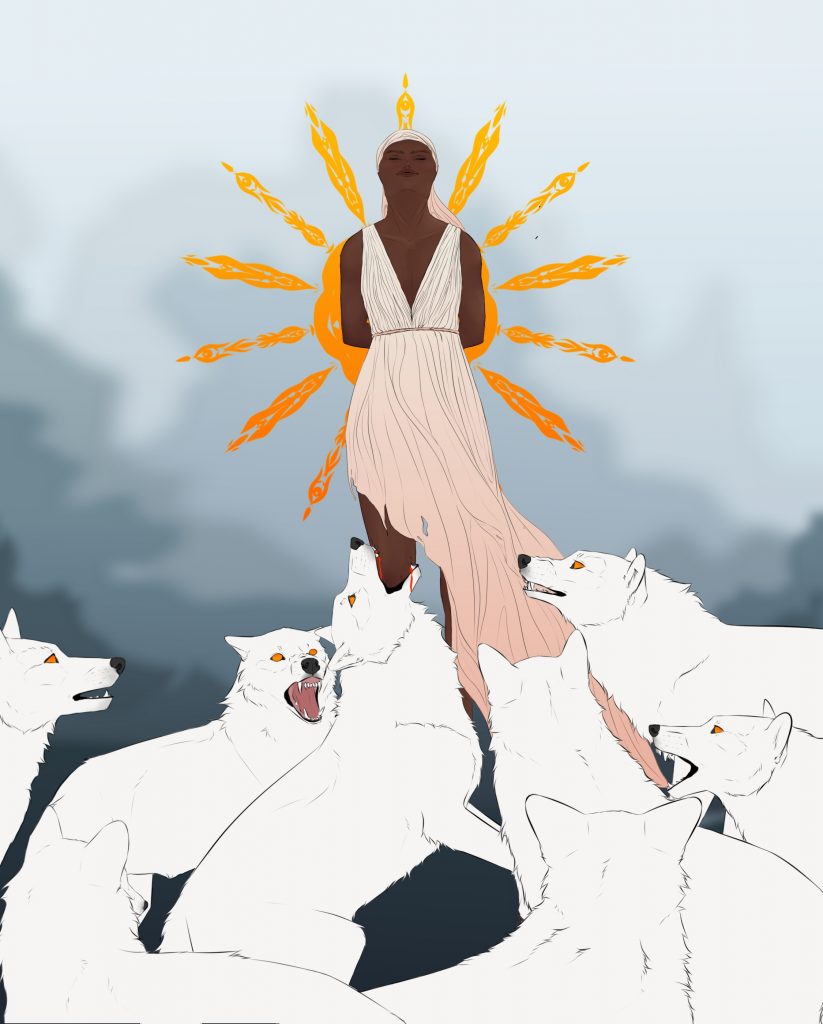
Major Paper Project, Tara Platenkamp: The Comparative Mythology of Mental Illness and Curses

Toni Morrison’s work often features myths and mythologization as a theme. While there are several instances of allusion and parallels to Classical mythology in Sula, I was struck by the similarities that can be drawn between the treatment of “madness” (or, realistically, mental illness) and curses. Historically, mental illness has often been treated as a kind of moral failing on the part of the person afflicted, making them dangerous to even associate with, as one does not want to find themselves similarly disposed. There is also significant evidence that many psychiatric disorders have a genetic component, allowing them to run through family’s generationally, similar to many mythological curses. The purpose of assigning a moral valuation to people with mental illness and equating it with a curse is twofold: on the one hand, presenting mental illness as a result of tampering with forces outside of one’s control and subsequently being punished by a higher power functions as a very effective scare tactic in regards to keeping people in line with societal norms. On the other hand, it serves to isolate them from society by presenting them not as a victim, but rather as a perpetrator, and instigator, and someone undeserving of sympathy.

            Of all the curses in Classical mythology to choose from—because the Greeks were viciously bloodthirsty, and very fond of punishment—the one I thought most reminiscent of Eva Peace was the tale of Lycaon, the twisted King of Arcadia who tested the god Zeus and paid dearly for it. Lycaon, in an attempt to trick Zeus, tried to feed the god King the entrails of Lycaon’s own son, Nyctimus, to see if the god was truly omniscient; the end result was, of course, that Zeus recognized the treachery, and as a punishment turned Lycaon and all his children aside from poor Nyctimus into wolves. Eva Peace, the matriarch of the Peace family with a questionable understanding of ethics, is similar in many ways to Lycaon. She falls under a similar role of a person who, while powerful in their own right, does not possess the grand influence that they perhaps believe they do. In the end, both Eva and Lycaon are the victims of their decisions in life, with Eva being left in a nursing home, and Lycaon roaming the wilderness in Greece. She also, like Lycaon, makes multiple sacrifices by way of the flesh, both her own and her son Plum’s, as well as possibly her daughter Hannah’s. While not all of her actions were bad, Eva’s influence deeply affected the lives of her children and grandchildren, and the general misfortune and mediocrity they find in life can, in many ways, be attributed to Eva. She is the first of the ravening wolves, but no one who is under her influence escapes entirely unscathed. While Eva is never explicitly described as being mentally ill in the novel, Sula doesn’t scrimp on showing her as someone with delusions of grandeur (subconsciously placing herself as a God-like figure in the Bottom community), as well as someone fully capable setting her own son on fire and murdering him in cold blood while fully believing it to be the right thing to do.

            In my art, I wanted to present the vision of Eva, torn between two sides; her internal vision of herself as a divine figure, and the monstrous external consequences of her actions. I also wanted to tie in the myth of Lycaon in a rather obvious way. The end goal was to encompass the parallels between mythology, curses, mental health, and Eva’s own story in a way that expresses not only the violence, but also the underlying tragedy and sense of ruination that Eva brings nipping at her heels.

Word Count: 621

Sources:

Ovid, and Rolfe Humphries. Ovid: Metamorphoses. Indiana University Press, 1971.

Hergenhahn, B. R., and Tracy B. Henley. An Introduction to the History of Psychology. Cengage Learning, 2019.

Donaldson, Elizabeth J. Literatures of Madness: Disability Studies and Mental Health. Palgrave Macmillan, 2018.

Tara’s Short Reading Response to Michael Davidson’s “Universal Design”

            Michael Davidson’s “Universal Design: The Work of Disability in an Age of Globalization” is a particularly relevant piece regarding current events. Davidson examines the intersectionality between disability and globalization, and in doing so considers how disabled bodies become both part of public spaces, as well as being treated as public spaces. The idea of disability being spatial is fascinating, not least because it removes the, as Davidson points out, often moral associations of being disabled. Disability therefore becomes no longer a fault, but rather an inevitability based on social and geographical positioning.

            Globalization is, at its essence, a game of wealth hoarding. The point of businesses developing international influence is effectively never for the sake of altruism, but rather to increase revenue. Davidson describes the “actuarial value” that is placed on disabled people—exemplified by the World Bank, but visible in daily life in a capitalist society—and establishes that in the free market “internationalization of healthcare creates—rather than eliminates—disability” (121-122).  Regarding the pandemic-sized elephant in the metaphorical room, Davidson’s writing drives at the fundamental issue with both globalization and the treatment of the disabled community: those who are most at risk will, almost inescapably, will be left to fend for themselves. While a disease does not have to be disabling, people with no support network are the ones who will become disabled, whether that be physically or financially. To tie back in with the previous idea of disabled bodies being treated as public spaces available for use by society, the current pandemic panic reveals the lack of empathy for the disabled by treating the deaths of people with preexisting health conditions (such as respiratory issues, autoimmune disorders, and the simple decline of advanced age) as being inevitable and relatively unconcerning. That is to say that if only the sick and the old die, somehow, they are the sacrifice that society is willing to make. Obviously not everyone in the general public feels this way, but the general apathy that tends to be thrown about in regards to those most at risk is revealing, to say the least.  

            One criticism that can be made of Davidson’s text is that he lacks what I would consider to be first hand accounts of the issues he’s presenting. Most of the examples he provides are media examples, such as the films of Jibril Diop Membety, the film Kandahar, and the tape cassette “Yiriba”. He mentions the scandal with Bayer and tainted blood, as well as the traveling theaters in Africa that try to teach about the AIDS epidemic, but this lack of personal anecdotes leaves his writing to examine the performative views of disability, rather than the lived experiences of people with disabilities. The lack of first hand perspective, to me, removes some of Davidson’s credibility. Davidson’s view of disability is decidedly formed by the social model, which tends to view disability through a larger lens rather than focusing on the individual; disability is the fault of society, not any single person. While I do not believe that any of the points Davidson was making in terms of how disability relates to globalism, I do think the lack of individual experience outside of media is an oversight. While art often reflects reality, it is not the same thing. Describing the plot of Dirty Pretty Things (2003), while harrowing and pertinent to Davidson’s thesis, is not the personal account of someone who has been through the black-market organ trade. In some ways, Davidson’s lack of first-hand accounts is reminiscent of the removal of disabled voices from disability studies by focusing on stories about disabled people rather than stories told by disabled people.

            One criticism that can be made of Davidson’s text is that he lacks what I would consider to be first hand accounts of the issues he’s presenting. Most of the examples he provides are media examples, such as the films of Jibril Diop Membety, the film Kandahar, and the tape cassette “Yiriba”. He mentions the scandal with Bayer and tainted blood, as well as the traveling theaters in Africa that try to teach about the AIDS epidemic, but this lack of personal anecdotes leaves his writing to examine the performative views of disability, rather than the lived experiences of people with disabilities. The lack of first hand perspective, to me, removes some of Davidson’s credibility. Davidson’s view of disability is decidedly formed by the social model, which tends to view disability through a larger lens rather than focusing on the individual; disability is the fault of society, not any single person. While I do not believe that any of the points Davidson was making in terms of how disability relates to globalism, I do think the lack of individual experience outside of media is an oversight. While art often reflects reality, it is not the same thing. Describing the plot of Dirty Pretty Things (2003), while harrowing and pertinent to Davidson’s thesis, is not the personal account of someone who has been through the black-market organ trade. In some ways, Davidson’s lack of first-hand accounts is reminiscent of the removal of disabled voices from disability studies by focusing on stories about disabled people rather than stories told by disabled people.

I Pledge.

Word count: 610

css.php